Flat roof repairs and leak tracing in multi-tenant buildings where the leak is rarely above the complaint.
Commercial and Industrial Flat Roofing in North York
425 Alness Street is in North York, a few blocks from Keele and Finch, so the buildings on this page are quite literally our neighbours.
What does the Keele and Finch industrial belt actually look like on the roof?
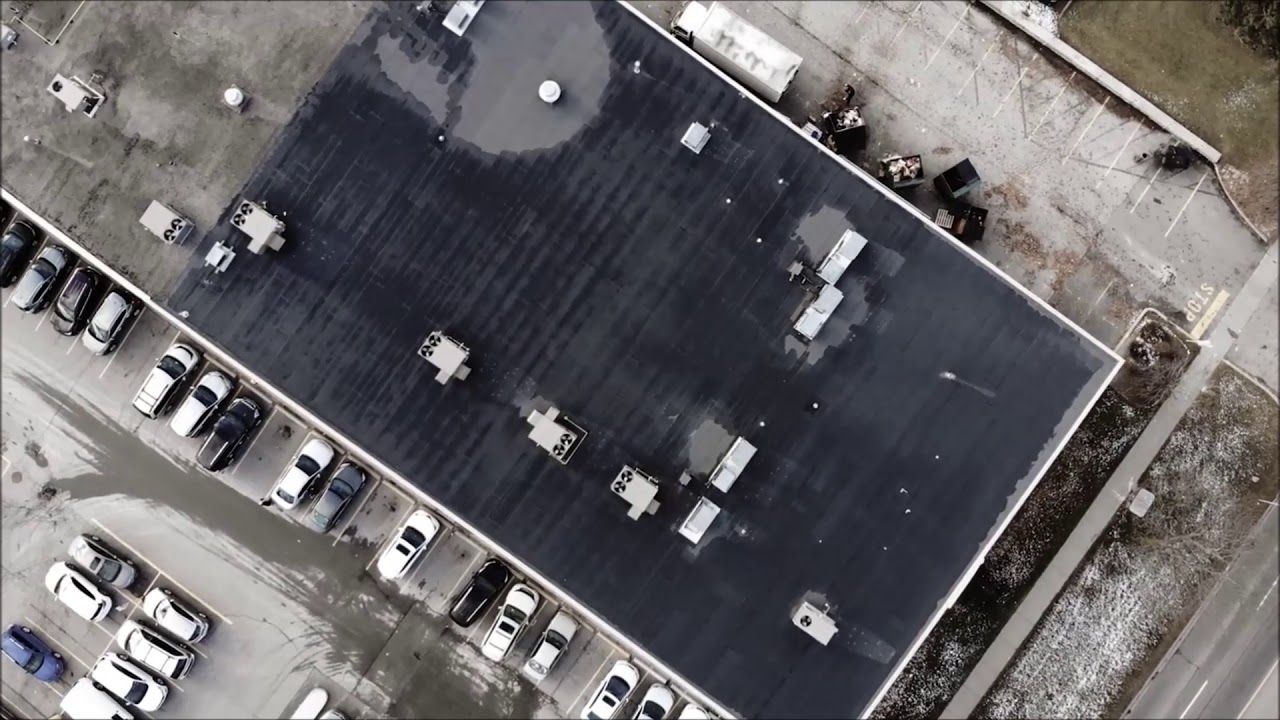
The blocks around our own address are a dense grid of one and two-storey multi-tenant industrial buildings, most of them built between the late 1960s and the early 1980s. On the roof that means steel deck on open-web steel joists, a vapour retarder that may or may not still be continuous, and either an original built-up roof with gravel or a modified bitumen replacement done sometime in the 1990s or 2000s. Units are small and shared, so a single building often has six or eight tenants under one continuous roof with fire walls carried up through it.
That last detail drives more North York repairs than anything else. Where a fire wall passes through the roof, you get a joint, a cap and a change of plane, and that joint is where water gets in. The second common source is the rooftop unit: small tenant-specific make-up air and condensing units get added over the years, each one cut into the deck by whoever was cheapest that season. On Sheppard and along Yonge, the stock shifts to concrete-deck mid-rise offices with SBS roofs, mechanical penthouses and amenity terraces over occupied space.
How does being inland change the roof loading here?
North York sits on the tableland well back from the lake, which means less of the lake's moderating effect than the Toronto waterfront gets and slightly colder overnight lows in winter. It is still Toronto for code purposes, so the Ontario Building Code's climatic design data in Supplementary Standard SB-1 assigns it the Toronto values rather than a separate figure.
What we see on these particular buildings is drift, not depth. Multi-tenant industrial blocks are full of stepped roof levels, tall mechanical screens and parapets between units, and snow blows off the open field of the roof and piles against those vertical surfaces. On an open-web joist deck the drifted strip can carry substantially more load than the field it was sized for. When a tenant tells us a ceiling grid is sagging in February, the drift line at a step is the first thing we go and look at.
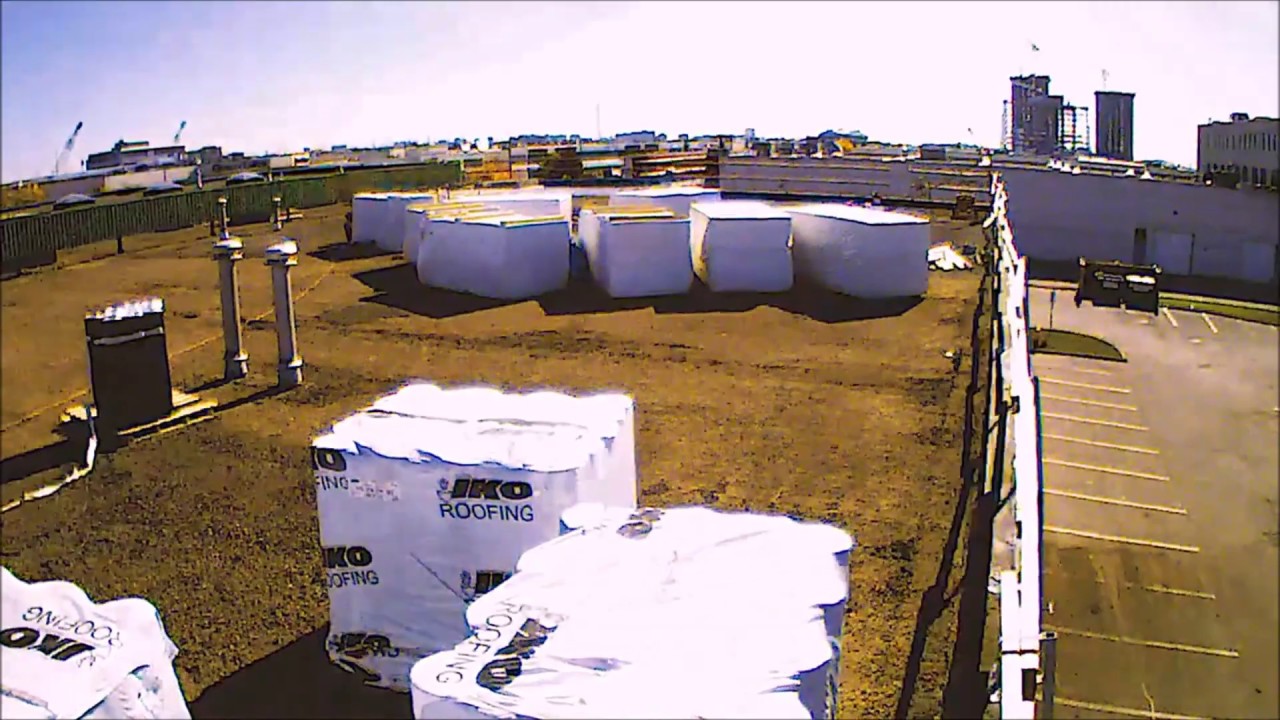
Woodbridge Flat Roof Repair at 120 Jevlan Drive
The work we do closest to home
Because we are minutes away, North York gets a lot of our small and urgent work as well as full replacements. Typical scopes include fire-wall joint rebuilds, curb replacement under old rooftop units, drain and sump repairs, and section-by-section re-roofing of multi-tenant blocks unit by unit so each owner can budget separately.
Replacement in SBS or single-ply on industrial decks.
Metal roofing and screen wall repairs on the older Downsview area plants.
Maintenance visits that catch curb and joint failures before the tenant does.
If you need a working number before a board meeting, the flat roof cost calculator gives a starting range by area and system.
What we do in North York
Commercial roofing
Commercial roofing for commercial and industrial buildings in North York.
Flat roof repairs
Flat roof repairs for commercial and industrial buildings in North York.
Emergency roof repairs
Emergency roof repairs for commercial and industrial buildings in North York.
Flat roof replacement
Flat roof replacement for commercial and industrial buildings in North York.
- Roof installation & replacement. Roof installation & replacement for commercial and industrial buildings in North York.
- Roof inspections. Roof inspections for commercial and industrial buildings in North York.


Roofing in North York: questions we get asked
Are you actually located in North York or is this a service page?
We are located here. NorthCan Roofing's address is 425 Alness Street, Toronto, ON M3J 2T8, in the industrial block near Keele and Finch, and the phone number is 416-456-0777. Every crew and every load of material for the whole region leaves from this yard, which is why North York buildings get the shortest mobilisation we can offer anywhere.
My unit's ceiling tile is stained but the roof above it looks fine. What now?
That is normal on a steel deck. Water travels along the flutes and drops at a hanger or fixture well away from the entry point. We survey the whole roof zone above and upslope of the stain, check every curb, fire-wall joint and drain in that area, and flood test a section if the source is still ambiguous, rather than patching the closest visible seam and hoping.
Can one unit in a multi-tenant Alness area building re-roof on its own?
Often yes, if the roof is divided by fire walls that give a clean termination line. Where the deck runs continuously across units, a partial replacement needs a tie-in detail that will not become the next leak, and it needs the neighbouring owner's cooperation for access. We map the divisions first and tell you honestly whether a partial scope is sensible.
Why do you look at snow drift against mechanical screens in North York?
Because these blocks have stepped roof levels, tall screens and party parapets, and snow blows off the open field and piles against them. Open-web joist decks were designed for a field load with a defined drift allowance. A screen added years after construction can create a drift the original design never contemplated. Sagging ceiling grid in midwinter is the warning sign to call about.