Inspection and maintenance
Condition reports and scheduled visits that catch problems before they become capital projects.
Learn more
Commercial and industrial
Repair, replacement and maintenance for low-slope roofs across the GTA and southwestern Ontario.
What we do
SBS modified bitumen, TPO, PVC, EPDM, built-up roofing and low-slope metal, serviced by the same crew for the life of the roof.
Condition reports and scheduled visits that catch problems before they become capital projects.
Learn more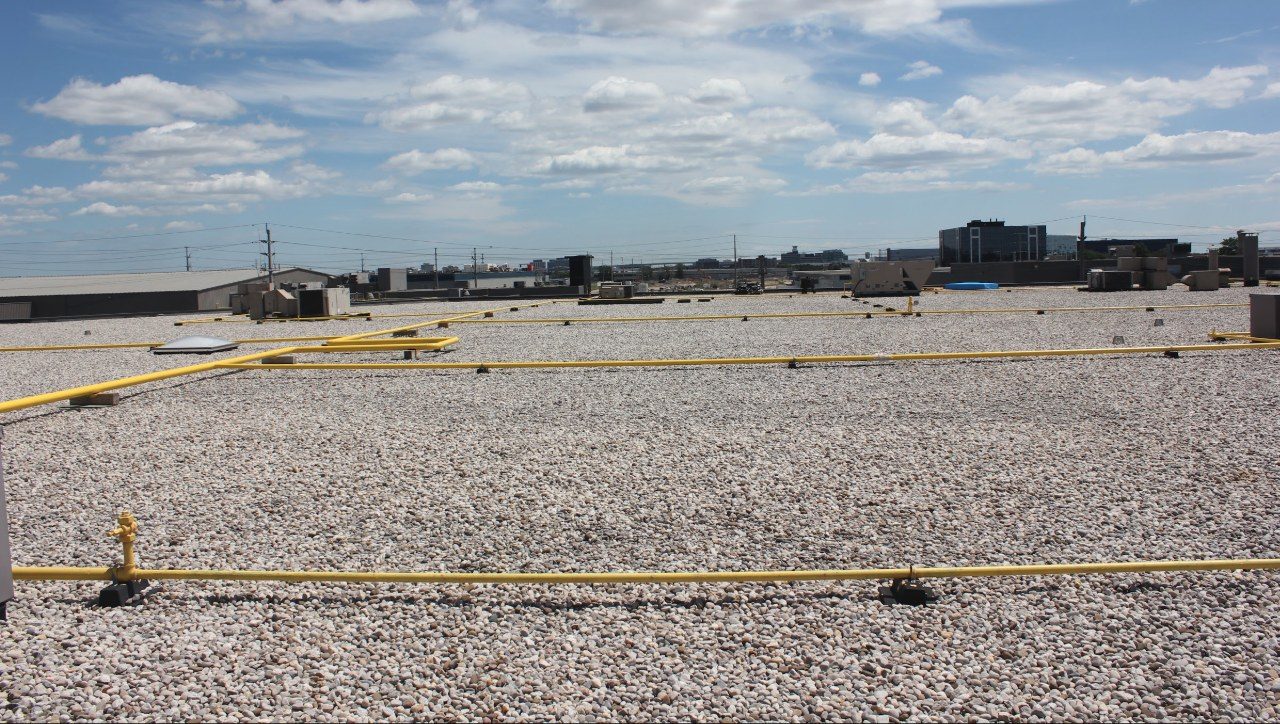
For property managers
Two quick steps. Tell us what you need and roughly how big the roof is, and an estimator comes back to you with a planning range. Nothing you enter commits you to anything.
Recent work
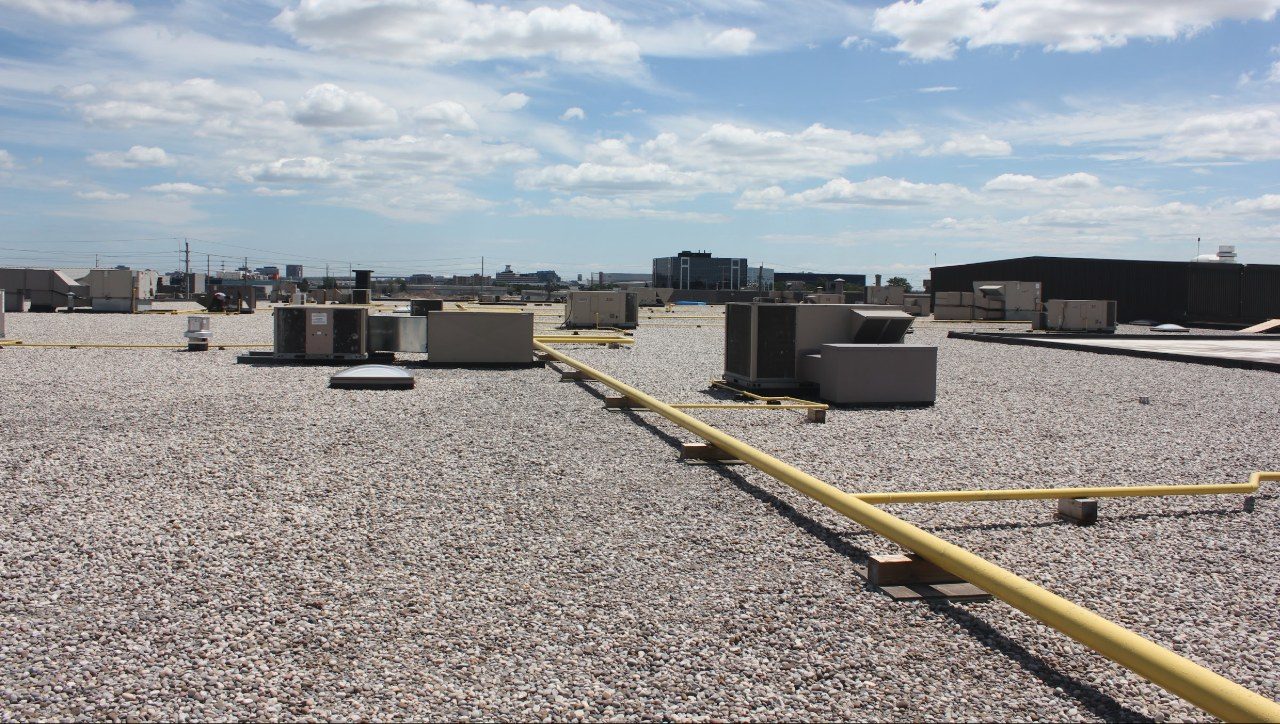
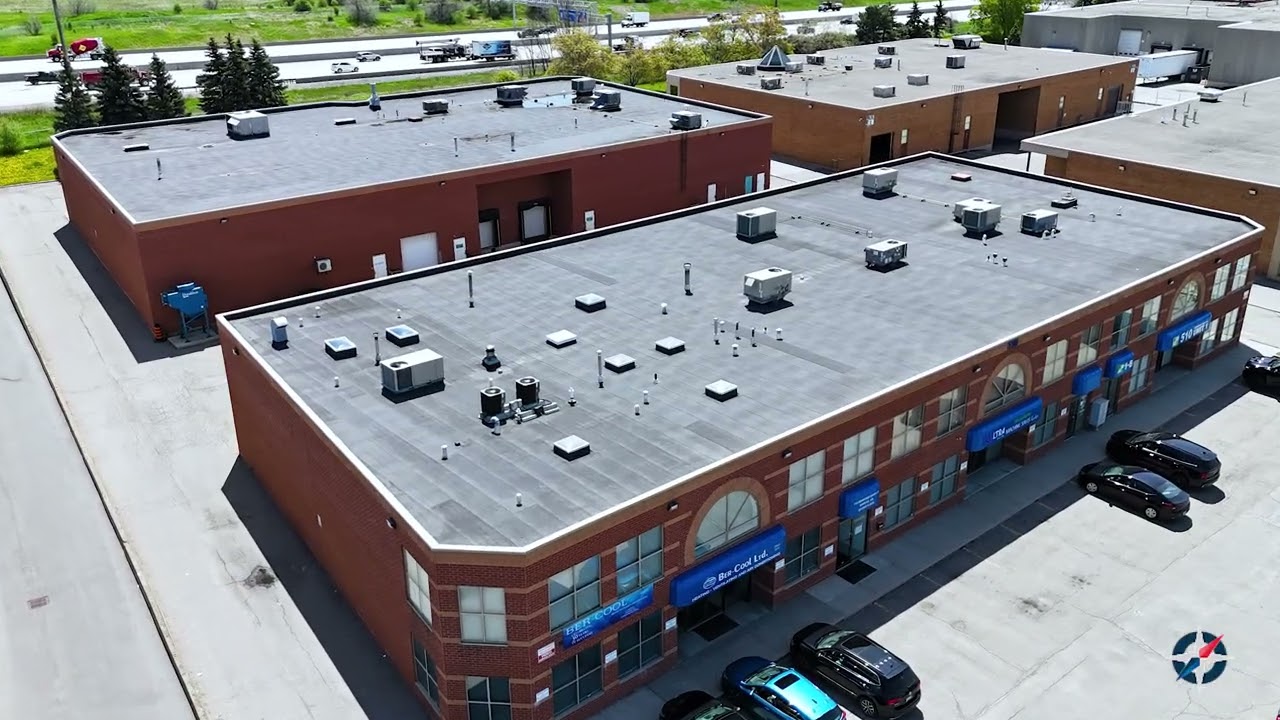
A sample of flat roofs we have filmed and worked on across the GTA. Every frame is our own footage.


Who we work with
We get on the roof and document the condition of the assembly, drains and flashings.
You get a written report, with photographs, that you can put in front of ownership.
The recommended system, the quantities and the exclusions, priced in writing.
Our crew does the work, around your operation, and stands behind it.
In more detail
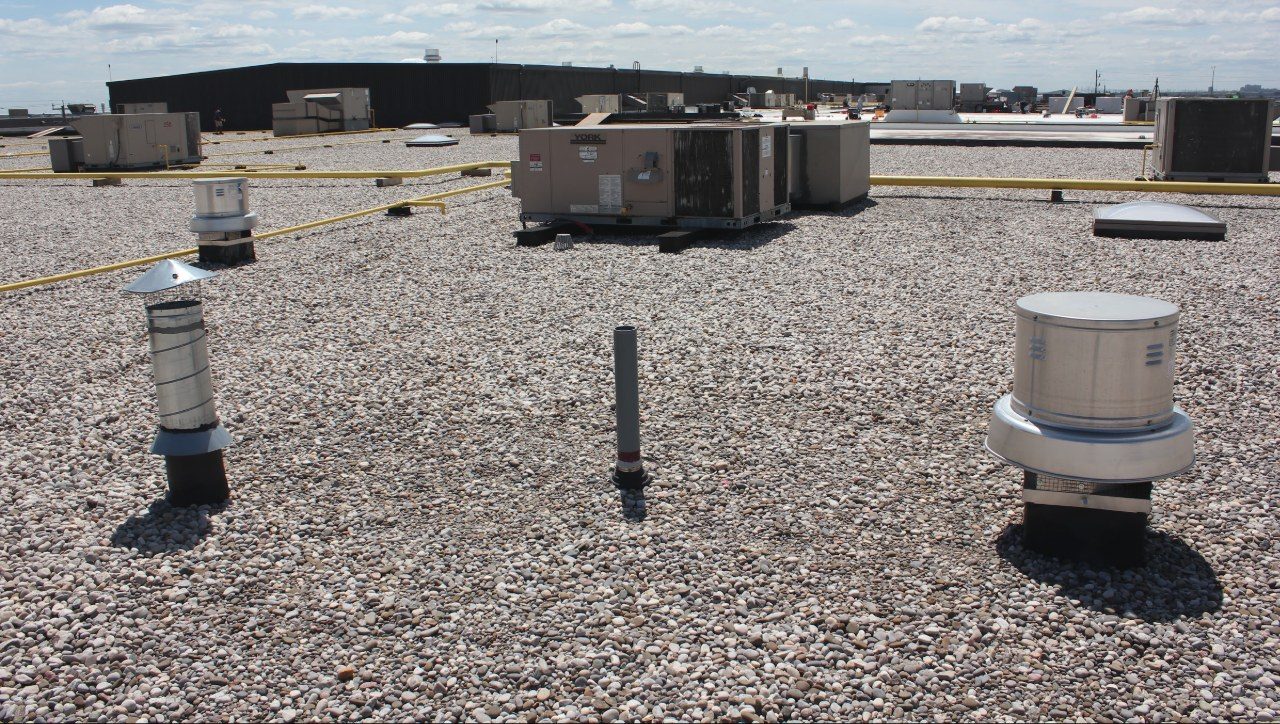
We work on the roofs nobody sees from the street. Flat and low-slope assemblies on offices, plazas, schools, warehouses, distribution centres, plants and mixed-use buildings, from a single seam repair to a full tear-off and rebuild of a multi-section roof.
The work divides into four things you can actually buy. Repairs when the field of the roof is sound and the failures are local. Replacement when moisture has spread through the insulation and every further patch is money spent on an assembly that is finished. Inspection and condition reporting when you need the decision put in writing before it reaches a budget meeting. And planned maintenance, which is what keeps the first two from arriving early.
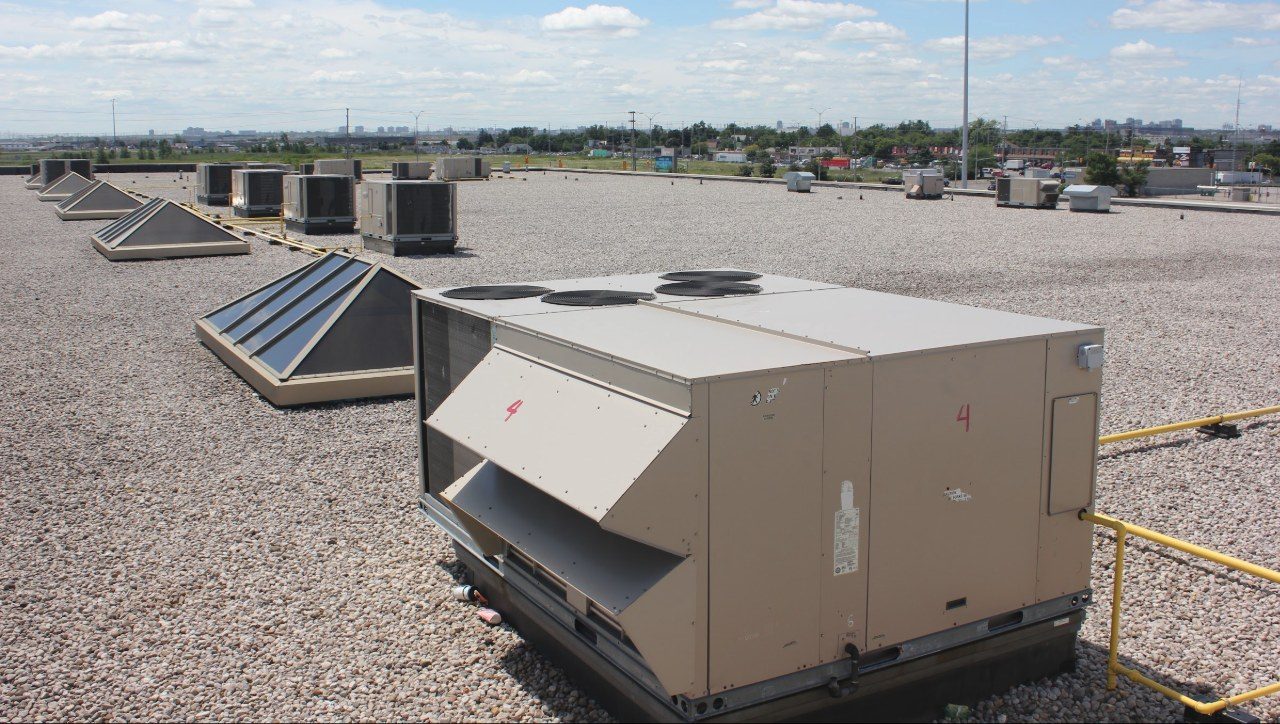
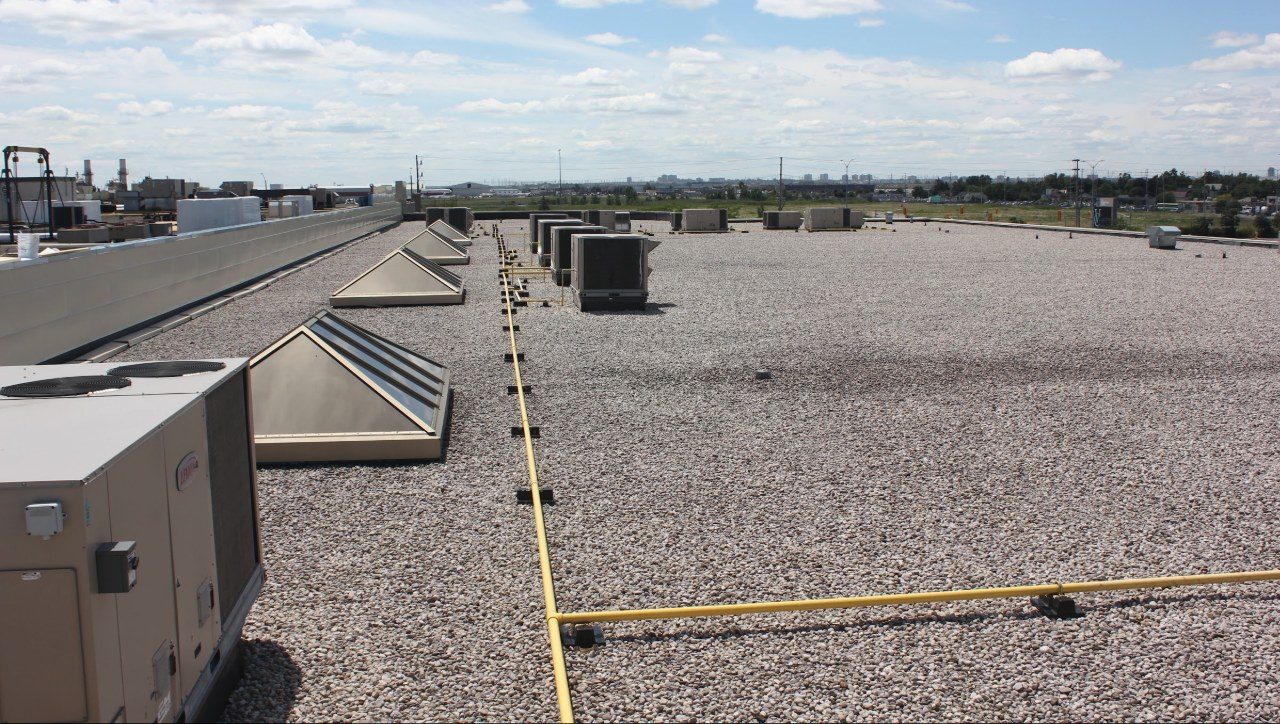
Around that core sits the detail work that decides whether a flat roof lasts: flashing, coping and counterflashing, drainage correction, curb rebuilds under rooftop units, skylights and roof hatches, and low-slope and standing-seam metal. Water almost never enters through the middle of a membrane. It enters at a junction, and junctions are trade work.
What we do not do is residential. No sloped shingle roofs, no houses. Commercial and industrial low-slope is the whole business.
Three steps, and the first one costs nothing.
Between the quote and the first day, the unglamorous items get settled: crane or hoist placement, lane occupancy permits, material staging, bin location, tenant notice, fire watch procedure where torch work is involved, and the daily working window. Those are the items that turn a good price into a bad project when nobody agrees them in advance.
Four kinds of buyer, and each one needs something slightly different from us.
None of these people are buying a roof for themselves. It is a line in a capital plan, a risk on an insurance file and a source of complaints when it fails. We write for that reader. WSIB coverage and certificates of insurance are provided on request, which is usually the first thing a property management office needs on file.
A low-slope roof is a different building assembly from a sloped one, not a flatter version of it. A shingle roof sheds water by gravity and tolerates imperfect detailing because nothing sits still on it. A flat roof holds water. Every seam, lap, curb, drain, pitch pocket and parapet junction is a place where standing water has time to find a defect, and the Ontario freeze-thaw cycle then opens that defect a little further with each pass through zero.
So the skills that matter are different. Membrane welding and torch technique. Reading a deck before setting a fastener pattern. Knowing when the insulation under an intact-looking surface is saturated, and proving it with test cuts and a moisture survey rather than guessing from above. Detailing a base flashing tall enough at a parapet. Building crickets so water reaches a drain rather than parking beside it. Sizing overflow scuppers so a blocked drain does not become a structural problem.
A contractor who does both markets divides attention between them. We do not. Our crews spend every working day on low-slope assemblies, our estimators quote nothing else, and the failures we have seen are all the same family of failures. That is the practical argument for specialisation: not that we care more, but that we have already met your problem.
It also shapes what we recommend. Because we are not selling one system, the answer to which membrane suits your building comes from the deck, the interior humidity load, the amount of rooftop equipment, the drainage design and how the roof will be maintained. Our comparison of flat roof types sets the options side by side.
Call 416-456-0777. Our emergency line runs around the clock, because water entering an occupied building is not a scheduling item. The first job is to stabilise: find the entry point, dry in the area with a temporary membrane or a mechanically fastened patch, protect what is underneath, clear the drain if the water has nowhere to go, and photograph the condition for your insurance file. The permanent repair follows once the assembly is dry and the cause is confirmed, because a permanent detail installed into wet insulation simply fails again.
What to do before the crew arrives, and what to have ready when you call, is set out on the emergency roof repairs page.
From the Alness Street yard near Keele and Finch we cover Toronto and the whole GTA, and we travel into southwestern Ontario for larger industrial work. Core cities include Toronto, Mississauga, Brampton, Vaughan, Markham, Oakville and Hamilton, reaching Barrie to the north and Kitchener to the west. The full list, grouped by region, is on the service areas page.
Book the free roof assessment. It is the lowest-friction way to find out where you stand, and it produces something you can act on rather than another opinion. If you are budgeting before you are buying, the flat roof cost calculator shows the range the main variables produce, as a planning figure and not a quote.
Bring whatever you already hold: previous roofing invoices, the original specification, a roof plan, and a note of where water has appeared and when. A history of where and when water arrived tells us as much as the walk does, and on a large multi-area roof it shortens the diagnosis considerably.
Call 416-456-0777, email info@northcanroofing.com, or use the contact page. We are open Monday to Friday from 06:00 to 19:00 and on weekends from 09:00 to 17:00, with the emergency line running outside those hours.
Get a straightforward assessment and a report you can plan around.
Commercial and industrial buildings with flat or low-slope roofs: offices, plazas, retail, schools, healthcare and institutional properties, warehouses, distribution centres, manufacturing plants and mixed-use buildings. We do not work on residential sloped shingle roofs. If a low-rise residential or mixed-use building has a flat roof, that is work we handle.
No. The roof assessment is free. We attend the building, walk the roof, document the condition and tell you what we found. A written quote for the work follows. A fuller roof condition report for capital planning is a separate, paid piece of work because it involves measurement, a moisture survey and a formal document.
Yes, and most of our work is on roofs somebody else built. We assess the assembly as we find it, including previous repairs, and tell you what is serviceable and what is not. Where a manufacturer system is involved we identify it so you know what is on the building before you decide anything.
WSIB coverage and certificates of insurance on request, the written scope and quote, the site logistics plan covering access, staging and hours of work, and the health and safety documentation your site requires. Most property management offices ask for the insurance items first, so we send them early.
Yes. Repairs and emergency stabilisation happen year round. Full replacements are possible through the winter with cold-temperature adhesives, self-adhered or torch-applied assemblies and adjusted welding parameters, but some systems and some adhesives have temperature limits, so the sequence and the system choice change with the season.
Tell us the address, the roof size and what you are seeing. We will book a time to get up there and put it in writing.
Call 416-456-0777 to book. Roof leaking right now? Our 24/7 emergency line is 416-450-1818.
Call 416-456-0777