
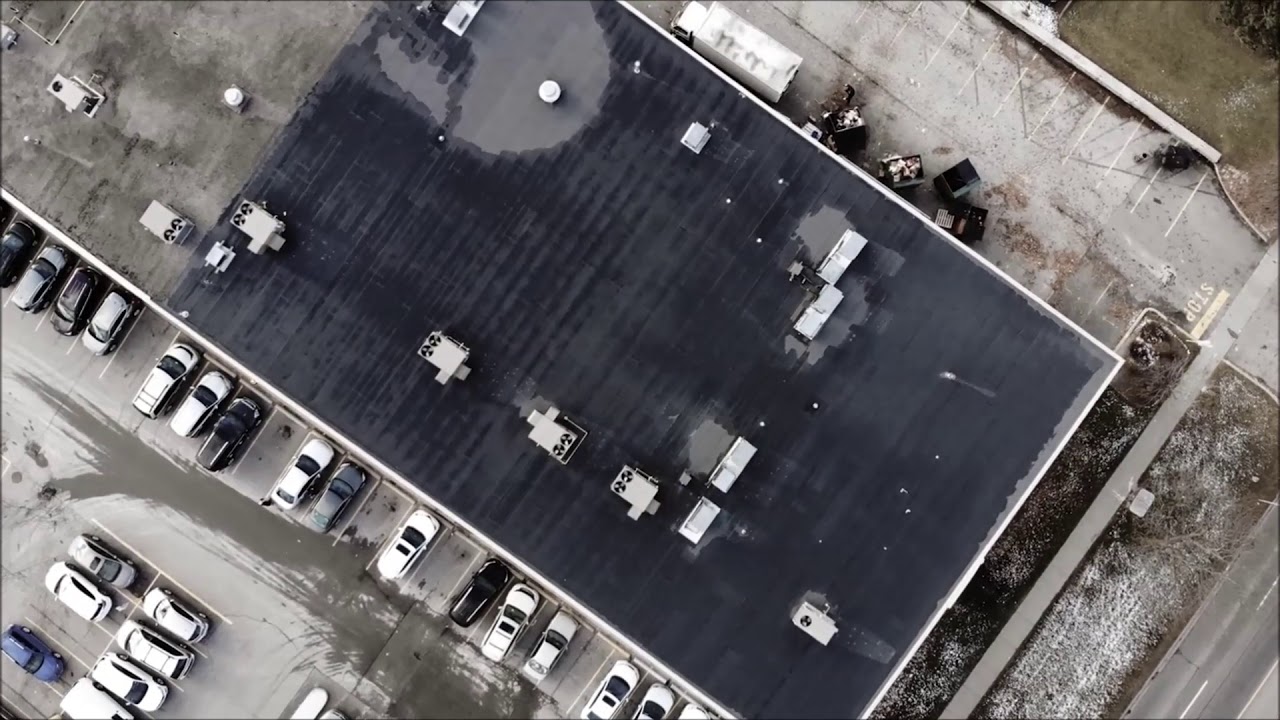
Repair suits a roof with isolated defects and dry insulation. Replacement becomes the sound decision once moisture is widespread, the deck is compromised, or repairs are recurring. The variables that move the number are wet insulation extent, deck condition, roof access, rooftop equipment, code requirements and how the work has to be staged around your operation.
What actually decides between repairing and replacing?
The decision is a condition question before it is a budget question. Three findings settle most cases.
How much of the assembly is wet. Insulation that has taken on water inside a sealed roof does not dry. Where moisture is confined to a defined area around a known entry point, cutting it out and rebuilding that section is a repair. Where moisture readings come back high in several unrelated areas, the roof no longer has a dry base to repair onto, and further patching is buying short intervals of time at rising cost.
What condition the deck is in. Steel deck under long-term saturation corrodes; wood deck softens and delaminates; concrete holds moisture and spalls at the surface. Deck repair changes the scope in a way membrane work never does, because it can bring structural review, hot work controls and additional access into the project.
Whether the failures are isolated or systemic. One split lap is a repair. Splits at multiple unrelated locations, seams that fail as soon as neighbouring ones are repaired, surface crazing across the field, and fasteners backing out are the signature of an assembly at the end of its service life.
A written condition report is what turns this from opinion into evidence. Our flat roof inspection records the whole roof, not only the wet corner, so the repair-or-replace call rests on documented findings.
Which variables move the cost of a repair?
Repairs look simple from the ground and vary enormously in practice. The variables that matter:
- Extent of wet material. The cut is sized on the roof by probing or scanning outward until readings return dry. Two leaks that look identical inside the building can produce very different removal areas.
- Where the defect sits. Work in the open field of the roof is straightforward. Work at a parapet, a curb, an expansion joint or a drain sump involves site-built detailing, sheet metal and tie-ins, and takes considerably longer per square metre.
- What system is already there. Tying new work into SBS modified bitumen, TPO, EPDM or a gravel-surfaced built-up roof each require different materials, different equipment and different levels of surface preparation. Gravel has to be removed and reinstated. Older or discontinued systems may need a compatible transition detail rather than a like-for-like patch.
- Season and weather window. Cold weather changes adhesives and handling, and shortens the working day. Snow clearing before work can start is its own line of scope.
- Whether it is planned or urgent. Planned repairs are batched, scheduled and detailed once. Urgent attendance during an active failure carries containment work, a temporary measure and then a return visit for the permanent scope.
Batching is the single most controllable of these. Five small defects addressed in one mobilisation cost less in total than the same five attended one at a time across a year, which is the practical argument for flat roof maintenance visits rather than reactive calls.
Which variables move the cost of a replacement?
A replacement is a construction project on an occupied building, and the membrane is only part of it.
- Tear-off versus recover. Where the existing assembly is dry and the structure allows an additional layer, a recover avoids removal and disposal. Where insulation is wet or a second membrane already exists, full removal is the only defensible route, and removal, disposal and the exposure risk of an open roof all enter the scope.
- Insulation strategy. Thickness, board type and whether tapered insulation is being installed to correct drainage all change material volume and labour. Correcting a drainage problem during a replacement is far cheaper than revisiting it later, and it is where a replacement earns its value.
- Deck findings. Deck repairs are discovered once the roof is open. A sound project prices a known allowance and handles the rest transparently rather than pretending the deck can be assessed from above.
- Rooftop equipment. Every unit, duct, conduit run, gas line and antenna has to be raised, worked around or temporarily disconnected. A roof crowded with mechanical equipment carries far more detailing per square metre than an open field.
- Perimeter length and roof geometry. Detailing follows the perimeter and the penetrations. Two roofs of equal area, one rectangular and one with courtyards, setbacks and multiple levels, are not comparable projects.
- Access and staging. Crane or hoist placement, lane occupancy, overnight material storage, protection over entrances and pedestrian routes, and whether deliveries can reach the building at all are real cost drivers on tight urban sites.
How do code and structural requirements enter the picture?
A replacement is the moment a roof is brought up to what current requirements ask for, which is not always what the original roof provided. Insulation values, wind uplift resistance at the perimeter and corners, fall protection and safe roof access, and drainage capacity are all reviewed at replacement rather than at repair.
Structural capacity is the other consideration. Recovering a roof adds weight; so does moving to a heavier assembly or adding tapered insulation. Where the added load or the existing framing raises a question, a structural review comes first. It is a modest step early and a very expensive discovery late.
None of this is optional scope that can be trimmed to make a number smaller. It is the difference between a roof that performs and one that starts the same cycle again.
Why do two quotes for the same roof look so different?
Because they are frequently not the same scope. When comparing proposals on a commercial roof, read for these lines before anything else:
- Is it a tear-off or a recover, and how much removal is included?
- How much wet insulation replacement is allowed for, and what happens when more is found?
- Is the deck inspected and repaired, and on what basis is deck work priced?
- Is drainage being corrected, or is the same ponding being roofed over?
- Are perimeter metal, curbs, drains, pitch pockets and flashing included, or listed as extras?
- Who handles access, protection, disposal and daily site cleanup?
- How is the building kept watertight at the end of each working day?
A proposal that is shorter and cheaper is usually narrower. The gaps do not disappear; they arrive later as changes, at a point where you have no comparison to check them against. To sanity-check the variables for your own building before any site visit, our flat roof cost calculator walks through the inputs that actually change a roofing scope.
How should this sit in a capital plan?
Roofs fail slowly and then quickly, which is exactly the wrong shape for an unplanned budget. The buildings that handle roof spending well treat it as a rolling capital item rather than an emergency.
That looks like a documented condition assessment, a maintenance schedule that clears drains and checks details before and after winter, and a projected replacement window that is revisited each year against actual findings. When the roof is inspected annually, the replacement year moves gradually and predictably, and the organisation gets time to fund it, tender it properly and schedule it in a good weather window instead of in February with water in the building.
The financial case for inspection is simply this: planned work is scoped, tendered and competitive, while urgent work is none of those things. That is covered further in our article on why roof inspections matter financially.
What does a defensible scope look like before you commit?
Before signing anything on a commercial or industrial roof, you should have four things in hand: a condition report covering the whole roof with moisture findings, a scope that states what is being removed and what is being kept, a clear position on deck and drainage, and a staging plan that says how your building keeps operating while the work runs.
With those in place the comparison between repairing and replacing stops being a guess about numbers and becomes a decision about a documented asset. If you are weighing that decision now, our team handles flat roof repairs, flat roof replacement and full roof installation and replacement across the GTA, and we will tell you plainly when a roof still has serviceable life left in it.