
Structural deck.
Steel, concrete or wood. It carries the load and determines how the roof above it is attached.
How SBS, TPO, EPDM, PVC, built-up, metal and restoration coatings behave on a flat building in southern Ontario.
People compare membranes. Roofs succeed or fail on the whole assembly, and the membrane is the thinnest part of it. From the deck up, a modern flat roof usually reads:
Steel, concrete or wood. It carries the load and determines how the roof above it is attached.
Sited on the warm side to stop interior humidity migrating into the insulation and condensing. Selection depends on the interior humidity load, which is why plants with wet processes need it thought through carefully.
Two or more staggered layers with offset joints, installed to the Ontario Building Code requirements that apply to the project.
Built to drive water positively to the drains. The most under-specified and most valuable element on a re-roof.
A premium membrane over wet insulation on a corroded deck is still a failed roof. That is why our roof condition report examines every layer rather than the surface.
How the assembly is held down matters as much as what it is made of. Mechanically fastened systems screw through the insulation into the deck and are quick and tolerant of a slightly uneven substrate. Adhered systems bond each layer with adhesive, give a smoother finished surface and avoid fastener back-out, but demand a clean, dry, sound substrate. Ballasted systems hold the membrane with stone or pavers and are largely limited by load and by the difficulty of tracing a leak under the ballast. The choice is driven by wind uplift demand, deck type and condition, and how much disruption the building can absorb during installation.
Which system are you interested in?
Relative longevity is a fair question and an unreliable number. In practice, a well-detailed two-ply SBS or a welded single ply on a dry assembly with working drainage will outlast a better membrane on a ponding roof with tired flashings. Drainage, detailing and maintenance move service life more than the choice of sheet does.
The workhorse of GTA commercial roofing. Two plies mean a puncture in one does not put water in the building, which matters on roofs where service technicians, cleaners and other trades are on the surface constantly. The granulated cap takes abuse. It is installed by torch, by hot mopping or self-adhered; on buildings where open flame is a concern we specify self-adhered or mechanically fastened base sheets instead.
Thermoplastic, so seams are hot-air welded into a continuous sheet. On a big open warehouse field, a crew covers ground fast, and the weld is as strong as the sheet when it is done properly. The risk is concentrated in that word properly: cold welds and unprobed seams are the most common defect, which is why we probe seams as work proceeds.
Also welded, and the one to specify where anything greasy or chemical lands on the roof. Kitchen exhaust plumes will degrade some membranes and their seams within a few seasons; PVC is formulated for it. It stays weldable, which makes tie-ins and future repairs clean.
Rubber, supplied in wide sheets so a simple roof has very few seams to begin with. Flexible in cold weather. Its seams are taped or adhered rather than welded, so seam preparation and cleanliness at installation matter a great deal, and seams are the first thing we check on an aged EPDM roof.
Whichever is chosen, repair strategy differs by chemistry, which we cover on flat roof repairs. Asphalt-based and thermoplastic materials do not bond to each other, so repairs must be made in compatible material.
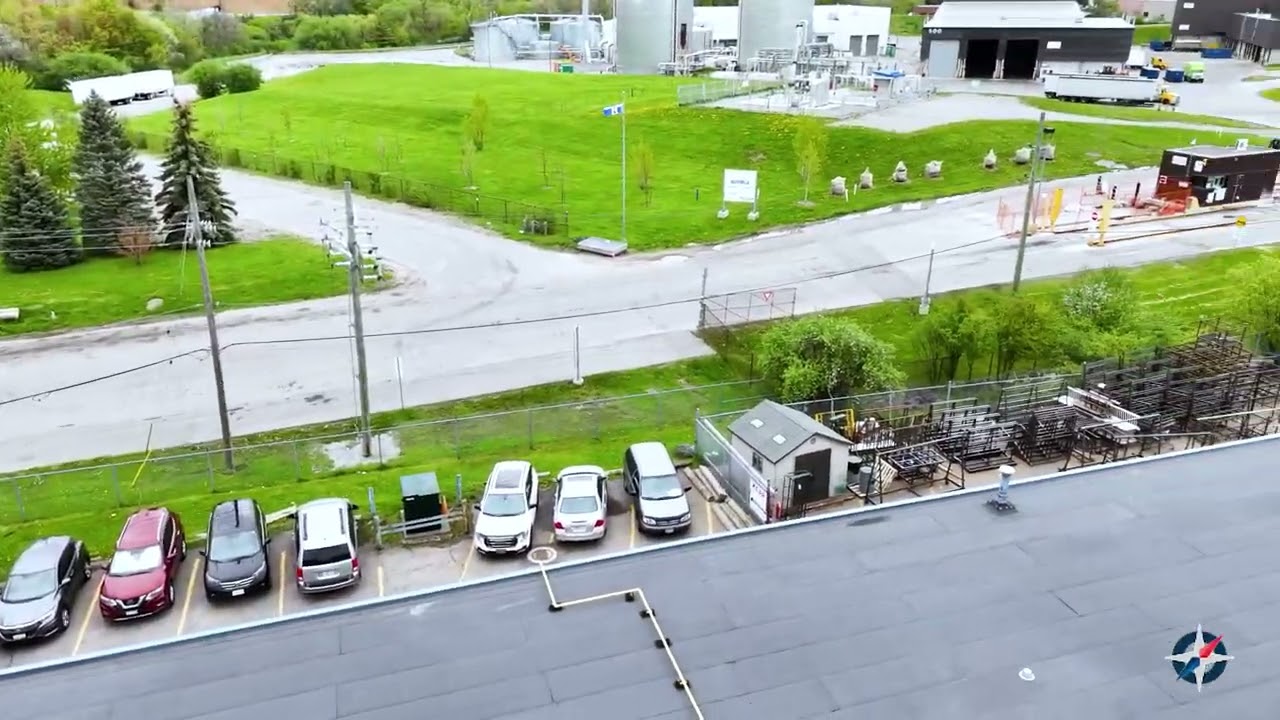
27 Vanley Street, North York
Work through these in order and the field usually narrows to one or two.
A production line, a server room or retail stock changes the tolerance for risk and the value of a redundant two-ply assembly.
Many curbs and penetrations favour a system that details easily and takes traffic. Few penetrations favour a fast single ply.
Grease and chemical exhaust point to PVC. Clean air leaves the field open.
Attachment method, fastener holding and whether a recover is even possible all follow from this.
Ontario context sits over all of it: freeze-thaw cycling working every unsealed lap, ground snow load Ss and rain load Sr set by location in the Ontario Building Code Supplementary Standard SB-1, drifting against parapets and screens, and ice damming at cold perimeters.
One practical note on procurement: specify the assembly, not the brand. A specification that names the deck attachment, the vapour barrier, the insulation type and thickness, the tapered layout, the cover board, the membrane and the flashing details lets you compare quotes that are actually comparable. A specification that names only a membrane invites four different roofs at four different prices, and the lowest priced of them is usually the one missing the drainage work.
If you are deciding between repairing and replacing, start with a commercial roof inspection, because the condition of the insulation and deck decides that question, not the membrane on top. If replacement is already settled, the process and the code-driven upgrades are set out on commercial roof installation and replacement and, for flat specifics, flat roof replacement.
Warehouses, plants and distribution centres have their own constraints, covered on industrial roofing. Panel systems are on commercial metal roofing. To see how the main variables move a budget range, use the flat roof cost calculator, then call 416-456-0777 for a free roof assessment. Our full service range is on commercial roofing.
If you are still weighing two systems, bring the shortlist to the assessment visit. The roof itself, its drainage and its equipment usually settle the argument faster than a specification sheet does.
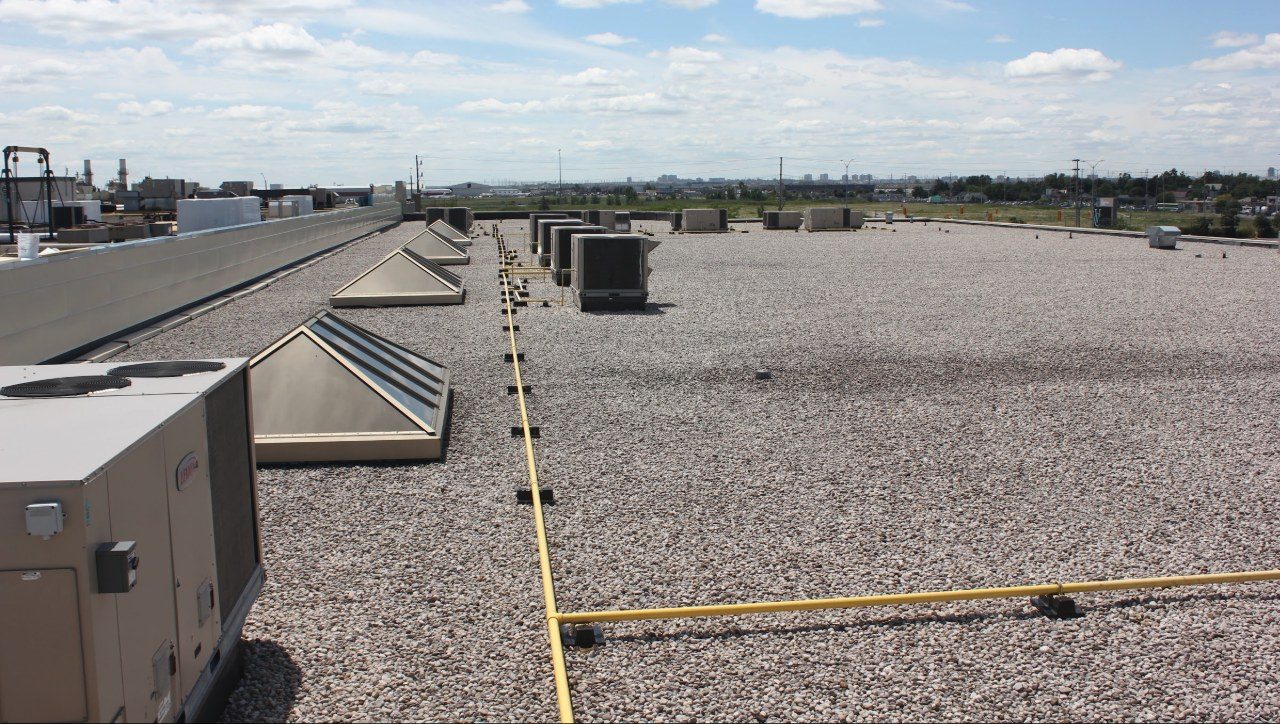
Long run of commercial flat roof membrane
No system wins that on its own. Service life is driven by drainage, detailing, foot traffic and maintenance far more than by the membrane. A two-ply SBS or a properly welded single ply on a dry assembly with working drains will outlast any membrane on a roof that ponds. Fix the drainage first and the membrane choice matters less.
They are different tools. White thermoplastic membranes reflect more sunlight and are common on large single-ply roofs; black membranes shed snow and ice faster and hide dirt. The right choice depends on the building, the mechanical equipment on the roof and how the assembly is insulated, which is a design conversation rather than a colour preference.
Only if the deck is sound, the existing insulation is dry, and the number of existing roof layers permits another. A recover saves disposal and time on a live building. Over wet insulation it traps the moisture permanently and hides the deck from inspection, which is why a moisture survey comes before the decision.
On a sound, dry, structurally intact roof, a coating or restoration system can extend service life and buy time in a capital plan. On a wet assembly it is money spent to hide a problem, because the moisture stays under it and keeps working on the insulation and deck. The moisture survey decides which case you are in.
Ballast is stone or pavers laid loose over a membrane to hold it down and shield it from sunlight. It works, but it adds load, makes leak tracing slow because the stone must be moved, and can be scoured in high wind at exposed corners. Most ballasted roofs we replace are rebuilt as adhered or mechanically fastened assemblies.
It can. Fire classification, wind uplift resistance for the roof zone, and the insulation levels required by the Ontario Building Code all form part of the specification, and some insurers have views on membrane type and on hot work. We set out the specification in writing so it can be reviewed by your insurer or consultant before the work is ordered.