Clear the area.
Move staff, tenants, stock, files and equipment out from under the water. Cordon off the floor area, because a wet floor and a possible ceiling collapse are both live hazards.
Active water entry on a commercial or industrial roof: call 416-450-1818 and we will talk you through making the building safe.
Six things, in this order. They protect people first, then the building, then your insurance claim.
Move staff, tenants, stock, files and equipment out from under the water. Cordon off the floor area, because a wet floor and a possible ceiling collapse are both live hazards.
A wet or iced flat roof with an unguarded edge is where people fall. Roof access is our job under the Occupational Health and Safety Act working-at-heights requirements, and there is nothing useful your staff can do up there.
Call 416-450-1818. Tell us the address, the roof type if you know it, where the water is entering and whether anything is still live under it.
Emergency calls cluster around weather events, and the pattern is predictable.
Emergency work happens in two stages, and confusing them is how buildings get billed twice for the same leak.
The objective is to stop water entering today, in whatever weather is happening. That can be a mechanically fastened patch over the failure, a peel-and-stick membrane over a split, a temporary sealant designed for wet application, a tarp weighted and edge-secured, or simply clearing a blocked drain and letting the roof shed. Interior protection goes in at the same time. A dry-in is honest work, but it is not a repair and we do not present it as one.
The permanent detail goes in when the assembly is dry and the actual cause is confirmed. That usually means removing wet insulation back to dry material, replacing the insulation and cover board, and rebuilding the membrane and metal detail in matching material. Doing this into a wet assembly produces a repeat leak. The full method is on flat roof repairs, and where the whole assembly has taken on water the answer moves to flat roof replacement.
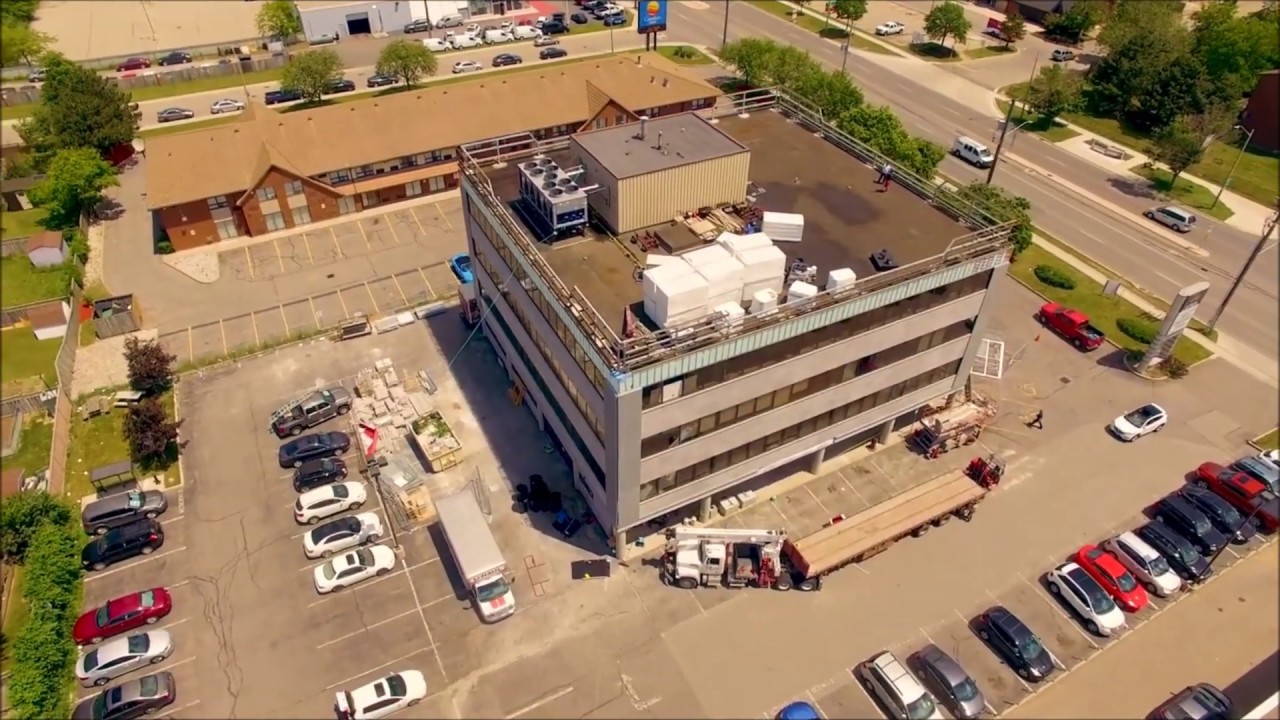
Flat Roof Repair in Hamilton by NorthCan
Water damage claims turn on evidence and on timing. We supply the roofing side of that file as a matter of course.
Report the loss to your insurer promptly, keep damaged contents until they are released, and keep your own log of when the leak started. If your building carries a roof maintenance agreement, the inspection history in that file is often the strongest evidence that the failure was an event rather than neglect.
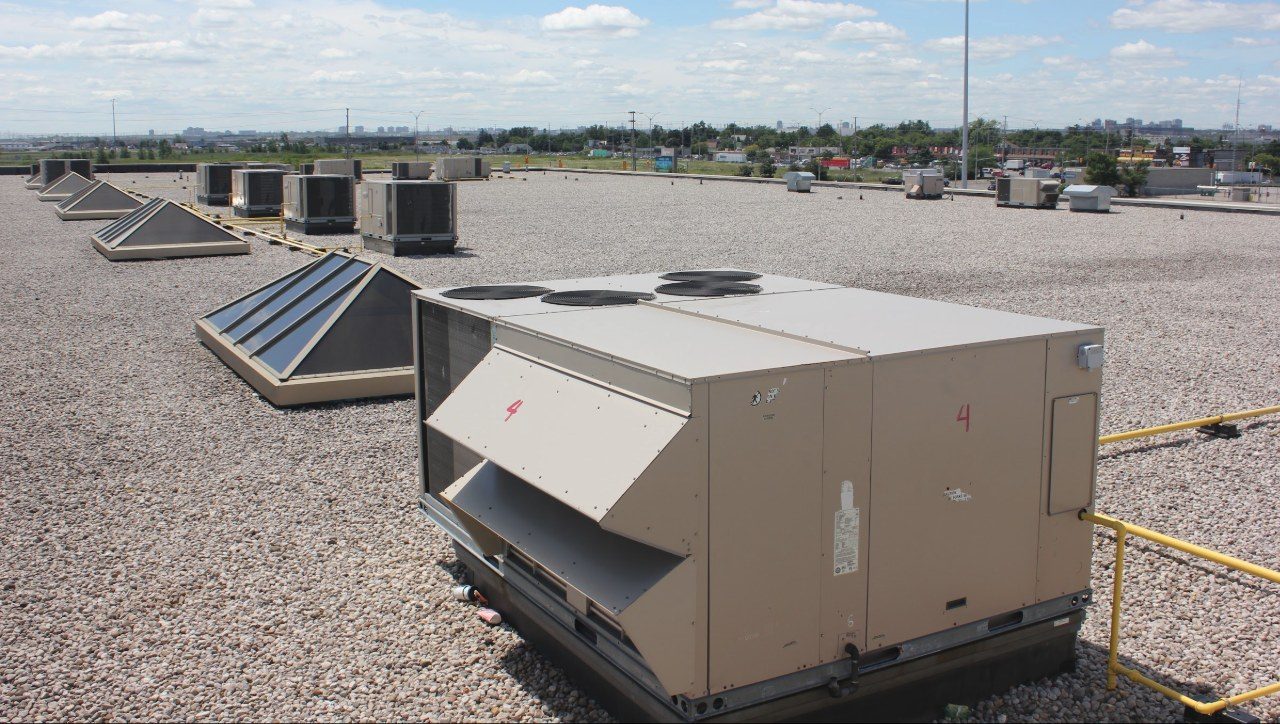
Winter roof detail during an emergency call
We attend, assess and do what can be done safely. Lightning, high wind and heavy ice make roof access genuinely dangerous, and no repair is worth a fall. In those conditions we work from inside to contain water and protect the building, then complete the dry-in on the roof as soon as the crew can be up there safely.
No. A wet, dark or iced flat roof with an unprotected edge is one of the most dangerous places on your property, and an unsecured tarp can lift in wind and take the cap flashing with it. Call 416-450-1818 instead and contain the water from inside.
Not usually, but do not leave it. A stain means water has already entered the assembly and the insulation above it is likely wet. Book a repair visit while it is still a small cut-out. Wet insulation that sits through a winter of freeze-thaw cycling turns a repair into a replacement.
Our scope is the roof and the make-safe work. We coordinate with your restoration company and provide the roofing documentation they and your insurer need. If you do not have a restoration company, tell us and we will describe what to look for so you can appoint one quickly.
The site address and access details, who will meet the crew, the roof type and approximate age if known, where the water is entering and how fast, whether power has been isolated, and whether anything structural looks affected. Photographs sent through help us bring the right materials the first time.